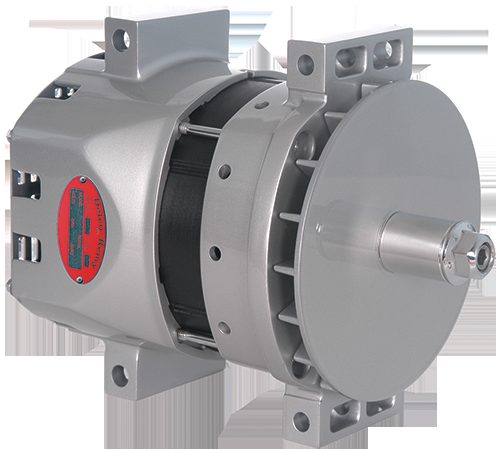
Remote Sense is a feature on premium Delco Remy alternators that reduces battery charge time and prolongs battery life. Traditional alternators regulate voltage at the alternator’s output stud. Voltage drop in the cables means the battery may receive less than 14 V even when the alternator is delivering 14 V. Remote Sense uses a second wire to measure the actual battery voltage and instructs the regulator to compensate for cable losses, ensuring that the battery receives a constant 14 V.
Benefits of Remote Sense
- Reduces battery charge time by up to 50% and decreases battery warranty claims by about 30% because the battery reaches full charge faster
- Increases alternator efficiency by compensating for voltage drop in long or heavily loaded cables, maintaining system voltage under high electrical demand
- Ideal for vehicles with frequent stop-and-go duty cycles (school buses, delivery trucks or trucks with lift gates) where batteries are continually discharged and charged
How to Connect Remote Sense Correctly
1. The Remote Sense terminal is identified by an “S” or “Remote Sense” label. Use only this terminal for the Remote Sense wire.
2. If the vehicle has no Remote Sense wiring, install a fused #16 AWG insulated wire from the alternator’s Remote Sense terminal to the positive battery terminal or a common distribution point. Use a 5 amp automotive fuse and protect the wire with conduit.
3. Do not connect other circuits to the Remote Sense terminal. If installing a non-Remote Sense alternator in a vehicle with a Remote Sense wire, disconnect and secure the wire to avoid short circuits.
4. A voltage drop greater than 0.5 V between the alternator and the termination point indicates corrosion or loose connections; inspect and repair all connections before retesting.