A starter motor is the most abused electrical component on heavy equipment: enormous current, extreme heat, vibration, and operators who crank longer than they should. Delco Remy's MT-series starters earned their reputation in exactly these conditions, which is why equipment OEMs across mining, construction, power, and transport specify them by name. This guide maps the major series to Indian applications and walks through how to choose — and protect — the right unit.
What makes a heavy-duty starter different
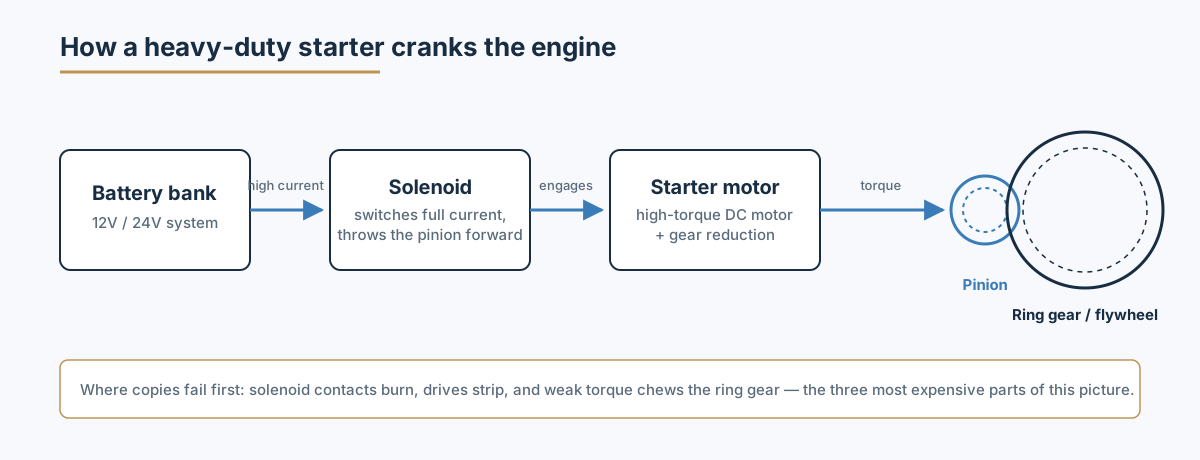
Cranking a large diesel is a brutal job. A heavy-duty starter must deliver very high torque from rest, survive heat soak next to an exhaust manifold, keep dust and water out of its drive, and do this thousands of times a year. The engineering that survives that — robust solenoids, sealed housings, heavy-duty drives and gear trains — is precisely what separates a genuine unit from the lookalikes discussed in our genuine vs counterfeit checklist.
The MT series at a glance
| Series | Engine class | Typical Indian applications |
|---|---|---|
| 50MT | Very large diesels | Mining trucks and shovels, locomotives, large gensets, marine main engines |
| 42MT | Large diesels | Excavators, dozers, large agricultural machinery, mid-to-large gensets |
| 41MT | Medium-heavy diesels | On-highway trucks, industrial engines where space is tighter |
| 40MT | Medium-heavy diesels | Long-serving design still common on Indian fleets and older imported equipment |
| 39MT | Medium diesels | Trucks and buses, compact heavy-duty installations |
The heavyweight: 50MT
When the engine is measured in tens of litres, the 50MT is usually the answer. It is the unit Indian mining operators trust to wake very large displacement diesels at altitude and in winter — applications where a failed crank means a stranded machine in a pit and a recovery operation, not a phone call to a nearby workshop.
The workhorse: 42MT
The 42MT is one of the most widely fitted heavy-duty starters in the world, covering the broad middle of the construction and power-generation market. Excavators, dozers, drilling rigs, and genset packages across India run this series. Its popularity is also why it is among the most counterfeited — verify the channel before you buy.
The compact heavies: 41MT, 40MT and 39MT
On-highway trucks and tighter industrial installations need serious cranking torque in less space. The 41MT and 39MT serve modern truck and bus fleets, while the 40MT remains a long-serving design that Indian fleets and older imported machines still rely on. All are available through the authorized channel with the correct drive, mounting, and voltage configuration for your engine.
How to choose the right starter
Series alone is not enough — within each series, configuration must match your engine exactly:
- System voltage — 12V and 24V systems take different units; mixing them destroys starters fast.
- Rotation direction — clockwise or counter-clockwise, set by the engine design.
- Mounting flange and clocking — the bolt pattern and housing orientation must match the flywheel housing.
- Pinion teeth and pitch — must match your ring gear, or both will wear out prematurely.
- Engine displacement and compression — determines the torque class your application actually needs.
- Duty cycle — frequent restarts (city buses, material handling) demand more thermal capacity than occasional starts.
The fastest route through all six factors is our compatibility lookup: search by equipment maker and model — CAT, Komatsu, Volvo, Tata, Cummins-powered machines and more — or by an existing part number, including OE cross-references. Send a photo of the old unit's nameplate with your requirements and we confirm the exact part number before quoting.
Warning signs a starter is on its way out
- A click but no crank — often solenoid contacts or a failing drive.
- Slow, laboured cranking on a known-good battery — worn brushes, bushings, or internal shorts.
- Intermittent starting that "fixes itself" — heat-related internal faults that will not stay fixed.
- Grinding on engagement — pinion or ring gear damage; address it before it takes the flywheel with it.
Catching these early lets you replace a starter on your schedule instead of the machine's.
Frequently asked questions
Which Delco Remy starter fits my excavator or truck?
It depends on your exact engine: voltage, rotation, mounting, pinion, and torque class all must match. Use the compatibility lookup with your equipment make and model, or send us the old unit's nameplate details — we confirm the part number before you order.
What is the difference between 50MT and 42MT?
Torque class and physical size. The 50MT serves very large diesels — mining trucks, locomotives, large gensets — while the 42MT covers the broad construction and genset market. Your engine specification, not preference, decides between them.
Can I replace a 40MT with a newer series?
Often yes — many legacy applications have documented OE cross-references to current production units. Ask us with your existing part number and we will confirm the correct modern equivalent through the official cross-reference data.
Why did my last starter fail so quickly?
Common causes: a counterfeit or refurbished unit sold as new, wrong configuration (voltage or pinion mismatch), prolonged cranking against a fuel or battery problem, or a failing ring gear. If the unit didn't come through the authorized channel, suspect the part first — see our buyer's checklist.
Are genuine Delco Remy starters available from stock in India?
Yes. New Indo Trading Company, the authorized distributor since 1992, holds starter stock in New Delhi. Request a quotation for current availability on your part number.
Get the right unit, once
A genuine Delco starter from the authorized distributor carries the factory warranty and the proven solenoid and drive components that fail first on copies. Browse starters in the catalog, build a quotation list, or send us your requirement — and if you're also reviewing the charging side, read our alternator guide next.